
The Detroit Sexual Assault Kit (SAK) Action Research Project
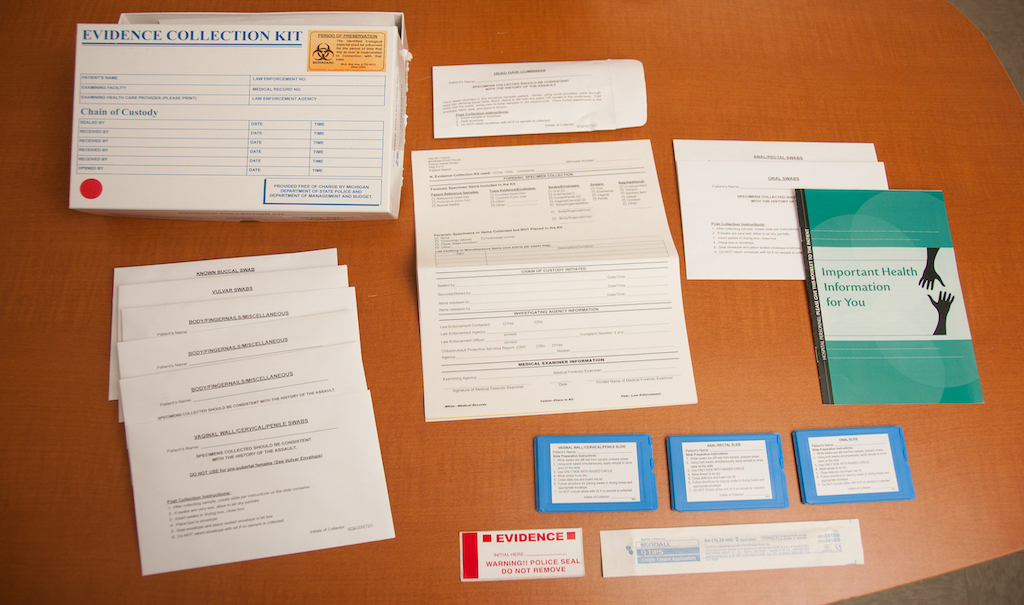
In 2009, approximately 11,000 sexual assault kits (also called “rape kits”) were found in a remote police property storage facility in Detroit, Michigan. The vast majority of these kits had never been tested by a crime laboratory for forensic DNA evidence. This meant that 11,000 rape victims had reported a violent crime to the police, but their cases were not investigated or prosecuted. To address this problem, a multidisciplinary team of prosecutors, law enforcement, nurses, advocates, and MSU researchers from the Department of Psychology and the Center for Statistical Training & Consulting (CSTAT) secured funding from the National Institute of Justice to develop empirically-based strategies to remedy this problem.
An initial sample of 1,600 SAKs were submitted for forensic DNA testing and CSTAT developed statistical models to evaluate whether there was utility in testing all of these previously-unsubmitted SAKs. The results indicated that many kits still contained viable DNA that was still actionable for police and prosecutors.
The multidisciplinary team in Detroit used these research findings to implement a number of policy reforms, including
- New policies to test all previously-unsubmitted SAKs in Detroit,
- New policies to test all current-case SAKs in Detroit,
- New training programs for practitioners on trauma-informed care,
- The formation of a new sexual assault cold case investigation and prosecution unit,
- The passage of a new state law, MI Act 227 of Public Acts 2014, which requires all new SAKs in Michigan to be submitted for DNA testing.
PI: Rebecca Campbell (Department of Psychology)
CSTAT collaborators: Steven J. Pierce, Dhruv B. Sharma.